
Environment · Environmental Wellbeing Index
Beyond Recoverable Limits: The Environmental Wellbeing Index
By Admin · Sep 20, 2026
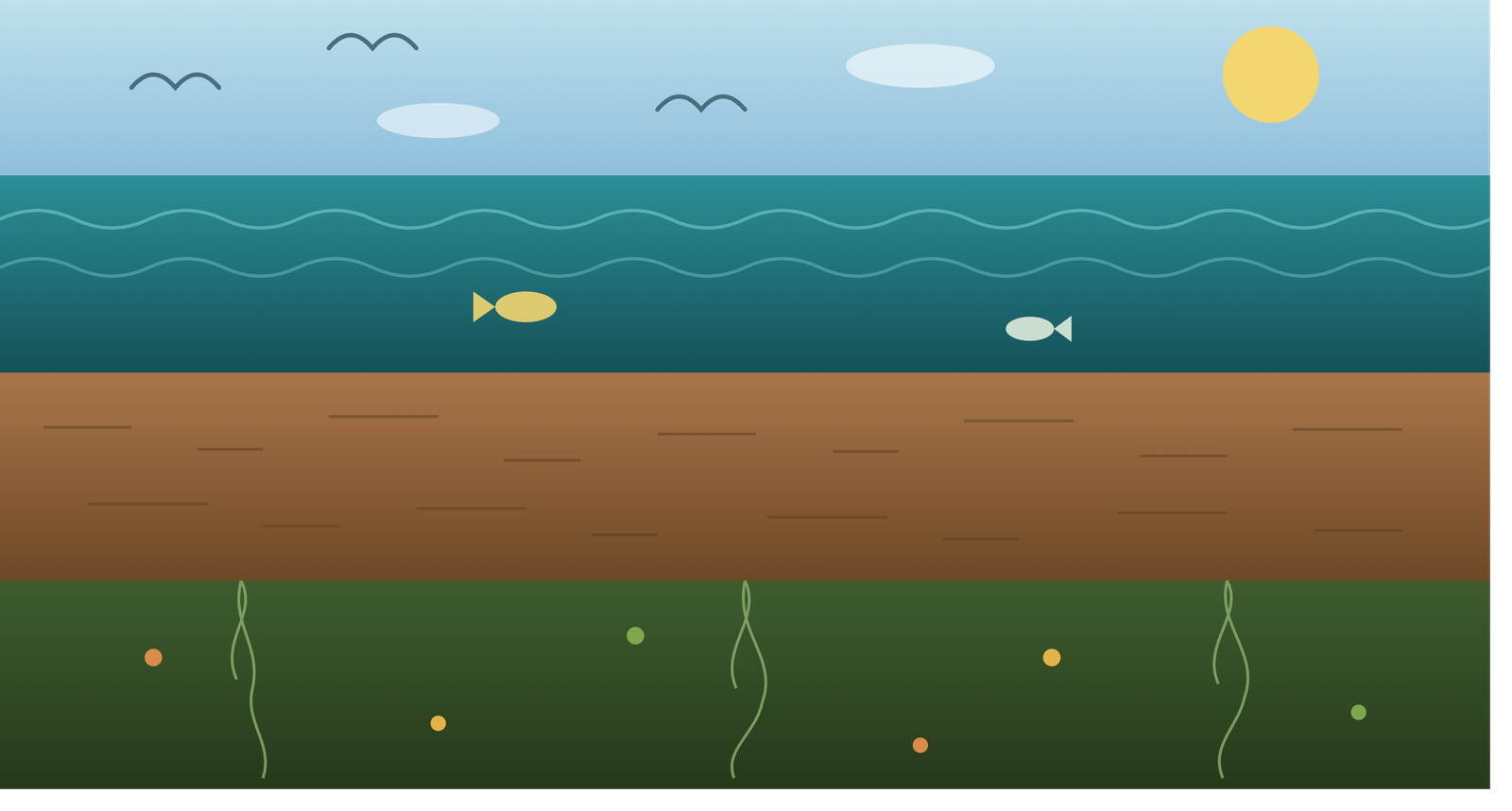
The Environmental Wellbeing Index is meant to sit alongside GDP and HDI on the table where decisions get made — a shared reference for how much pressure the planet can still absorb, and who is doing the work of recovery. The Global Wellbeing Forum is convening scientists, statistical agencies, and civil society now to shape its first methodology cycle.
Every era needs a number that tells it the truth about itself. GDP told the twentieth century how much it produced. The Environmental Wellbeing Index (EWI) is built to tell this one how much the planet can still recover — and who is helping or hindering that recovery.
The Index measures four interlocking systems — soil, water, air, and biodiversity — and combines them into a single, comparable score for every country, continent, and ocean basin. It does not stop at describing environmental condition; it attributes responsibility, distinguishing the exploitation that pushes systems past their recovery threshold from the restoration that pulls them back.
The four pillars
Soil. Fertility loss, erosion rates, desertification spread, chemical and heavy-metal contamination, and land-use conversion. Soil is treated as a living, finite resource with a measurable regeneration rate.
Water. Freshwater availability and quality, groundwater depletion, river and lake health, plus ocean-specific indicators: acidification, plastic and chemical load, warming, and marine ecosystem stress.
Air. Greenhouse gas concentration and trend, particulate matter, industrial and transport emissions, and shifts in atmospheric composition relative to pre-industrial and regional baselines.
Biodiversity. Species population trends, extinction risk, habitat fragmentation, ecosystem connectivity, and genetic diversity within key species groups, on land and at sea.
Measuring pressure, not just state
Most environmental indices report a snapshot: how much forest remains, how clean a river is today. EWI adds a second layer — the rate of exploitation against the rate of natural recovery for each pillar, in each geography. A coastline can look healthy today and still be scored as high-risk if extraction is outpacing regeneration.
This produces two running scores per unit of measurement — a country, an ocean basin, a continent:
Negative Impact Score — exploitation, extraction, and pollution relative to natural carrying capacity.
Positive Contribution Score — restoration, conservation, regulation, and sustainable practice.
The two combine into a single Net Wellbeing Score, letting the Index credit genuine improvement rather than simply ranking who pollutes least.
Who contributes the data
No single actor holds a complete picture of planetary health. EWI is built on a layered data-collection model that triangulates government reporting, independent science, and ground-level observation:
National statistical and environment agencies — official land, water, and emissions data; regulatory and policy records used to score positive contribution.
Satellite and remote-sensing bodies — continuous, comparable measurement of deforestation, soil moisture, sea surface temperature, and air composition, reducing reliance on self-reported figures.
UN bodies and scientific panels — baseline thresholds and planetary-boundary science that anchor what "recoverable" means.
Research institutions and universities — peer-reviewed field studies, model validation, and regional calibration of global data.
Industry and corporate disclosures — sector-level extraction, emissions, and waste data, cross-checked against independent monitoring rather than accepted at face value.
NGOs and conservation networks — on-the-ground restoration outcomes, protected-area effectiveness, and early warning on local degradation.
Citizen science and local communities — ground-truthing for remote and under-monitored regions, plus indigenous and local ecological knowledge.
How the score is calculated
Each pillar is built from a set of measurable indicators — for example, soil carries erosion rate, fertility index, and contamination load. The calculation moves through four steps:
Indicator normalization — each raw metric rescaled to a common 0–100 range against scientific thresholds.
Pillar aggregation — a weighted average of indicators within Soil, Water, Air, and Biodiversity.
Impact split — each pillar score separated into Negative Impact and Positive Contribution.
Composite index — the Net Wellbeing Score is a weighted sum of the four pillars, reported per country, ocean basin, continent, and globally.
Weights aren't fixed arbitrarily — they're set through an expert-panel and stakeholder consultation process, and revisited on a fixed cycle so the Index can adapt as science and priorities evolve, without losing year-on-year comparability.
How the Index gets built, phase by phase
Data collection and validation — pull data from all stakeholder streams; cross-check government and industry figures against satellite and independent scientific sources; flag and resolve discrepancies.
Normalization and baseline calibration — convert raw indicators into comparable scores against planetary-boundary and regional baselines, adjusting for natural variation between ecosystems.
Pillar and impact scoring — aggregate indicators into the four pillar scores and separate each into negative-impact and positive-contribution components.
Composite calculation and peer review — compute the Net Wellbeing Score at country, continent, and ocean level; submit methodology and results to independent scientific review before publication.
Publication and policy engagement — release the Index publicly with full methodology disclosure; engage governments, industry, and civil society on findings; open a feedback window ahead of the next cycle.
An index built to be used, not just published
The Environmental Wellbeing Index is meant to sit alongside GDP and HDI on the table where decisions get made — a shared reference for how much pressure the planet can still absorb, and who is doing the work of recovery. The Global Wellbeing Forum is convening scientists, statistical agencies, and civil society now to shape its first methodology cycle.